1. The most important thing I packed was a BIG dose of humility because I was forced to rely on other people EVERY day.
The most incredible thing happens when you join the Peace Corps and move to a new country: You find yourself absolutely helpless. Seriously. You don't know ANYTHING. All those years of travelling around the world or living independently, suddenly boil down to nothing on your first night in a rondaval in remote Lesotho. You don't know the language, culture, or even your own name! You NEED others, like you never have before. You are forced to ask for help EVERY day. You find yourself forced to trust strangers who offers a ride, a meal, or a warm place to shelter in the rain. Your Basotho friends and family become your ambassadors to a world you don't understand, translating and explaining the delicate nuances of what's happening around you.
It's often frightening, and even disarming. You feel exposed. Reliant. Yet oddly more inter-connected than ever before. You realize the importance of community. I felt thankful, grateful, and humbled EVERY single day by the kindness of people who had little to give, but would willingly share whatever they had with me. It's an experience which has, without a doubt, made me a more compassionate, thankful, and giving person.
2. Kids are kids... No matter the culture, country, or language.
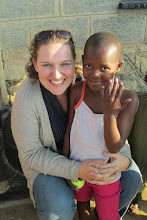
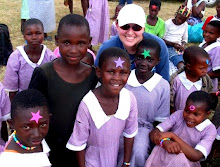
My kids were my solace and sanctuary during my time in Lesotho... Because, often unlike the adults around me, they didn't judge or stereotype me. They didn't see a white, rich, or strangely unwed woman. They didn't harbour any jealousy for my belongings, or talk about me, right in front of me, in Sesotho. They loved and were delighted by me; unafraid to approach my house or speak English with me. Their innocence was my blessing. They were my teachers, who never became embarrassed or silenced in the wake of my never-ending questions and curiosities. They were by my side through every day; my cure to every temporary bout of loneliness or isolation. They gave me a purpose to be here.
And they are just kids... People who see my photos might see dirty bare-feet or black skin. I see Mookho, Nthatisi, Lerato, Mantletse, Makoro, Katleho, Mokhalaka, Tumello, Thabang, Rappelang, and Tukiso. I see individuals. Funny, brilliant, quirky, unique, little human beings. They didn't stereotype me, and I won't contribute to treating them like pawns in some international aid campaign. They aren't sad or to be pitied. They have wonderful, beautiful, happy lives living in a proud and peaceful country. Yes, they face incredible challenges, many of which are unjust and disproportionally common in Lesotho. They may have the deck stacked against them, but they are not weak, helpless, or needy. They are funny, beautiful, and innocent... Kids are just kids. :)
3. People are neither wholly good nor bad. It's unjust to judge a person's actions without first understanding the cultural context.
It's ironic that the most rewarding part of my Peace Corps service has also been the most challenging: my cross-cultural friendships. Without a doubt, they have been both difficult and transformative for me. This is the hard stuff, people... Learning to love and embrace another human being without judgement is perhaps the greatest challenge of our existence. I learned that the hard way during Peace Corps.
Let me provide an example: I think I gained more from my friendship with my colleague, *****, than almost anyone else in Lesotho. I love *****. He was an amazing friend: funny, hilarious, and always there when I needed him. He also happens to be the person who tormented me the most with sexual advances, beat my students relentlessly, and firmly believes that his wife is his property because he paid labola for her ( I believe he used an example about buying a dog when he explained this to me the first time.) This belief was also the defense he gave when he admitted that he'd once raped his wife, when she denied him sex. Apparently, he had the right to do this.... After all, she's his property, right?
Now prepare yourself, because this next statement took me almost two full years to truly understand:
***** is not a bad person.
He's not evil or hateful. You might find it surprising (I know I sure did!) to hear that ***** is a kind and ultimately good human being, who just has some very misplaced values. This doesn't make him wholly good or bad. He absolutely is responsible for his actions; I would never absolve him of his wrongdoings. To judge him without considering the cultural context, however, would be unjust to who he is as a human being.
Part of this lesson for me was accepting that rape, domestic violence, and gender disempowerment are not the product of any single person. They are the product of a culture and social history. ***** is a product of that, too. He is not to blame for all the ills of rape or sexual harassment in the world. He made a bad decision because his culture, family, and background taught him that this behavior is not wrong. In his defense, I do believe he regretted what he did to his wife. He clearly felt remorse and knew, on some level, that despite how he'd been taught to treat women, that his actions had hurt someone he loves.... For me, ***** is evidence that people are complex, and their decisions aren't the total sum of their character.
You want to fight abuse and gender disempowerment? Good. Do it. I sure fought ***** enough on the issue over the last two years. Just know that when you do, you're not fighting a single person or place. You're fighting a cultural legacy that tolerates, and in some cases, even encourages such behaviors.
4. Culture is powerful.
Before coming to Lesotho, I naively believed that my Masters degree in Anthropology meant that I knew something about culture. I thought I had a healthy dose of respect for the power and influence of culture on human beings. I had no idea.
Culture is powerful; there's simply no other way to say it that plainly. Part of what gives it it's power, is that NO ONE (even little Miss-Oxford-educated-me) is immune to it's effects, and it's roots and influences are often difficult (if not entirely impossible) to discern... Or at least, they're difficult to discern until you put two belief systems, worldviews, and customs side-by-side and compare them. That is EXACTLY what the last two years have done for me. I've learned just as much (if not more) about my own culture, beliefs, and prejudices, as I have about Basotho's.
People often look at culture, and they fixate on the obvious external differences: song and dance, language, or modes of dress. The last two years have taught me that these differences are NOTHING compared to the more subtle, yet deeply ingrained differences in social cues, relationships, belief systems, morals/values, and worldviews. I can't even begin to describe the magnitude of these differences... They are powerful and always present. It's the way people express their emotions, or harbour gendered expectations. It's how we perceive the actions of others and respond to them in kind.
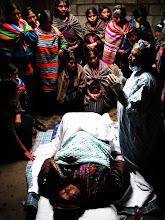
I feel proud that I have lived amongst a traditional Basotho community. I immersed myself in Basotho culture; I adopted their dress, language, and customs, as much as possible. I participated in rites-of-passage, holidays, and community events. I quietly accepted customs or habits (like adultery, domestic abuse, or animal abuse) that I often considered personally immoral. I did all of this out of respect for this culture. I was just about as integrated as it was possible to be... And my investment was rewarded with acceptance from the community. Ha Selomo was truly my home for two years; I loved my village and community. I felt safe and protected there. My presence eventually became more than accepted; it was expected. My absence will be noted.
Yet even after two years as a member of a Basotho community, I have to admit a difficult truth to myself... This will NEVER be my culture. It simply never could be. I could live here for 20 years, marry a Mosotho, speak Sesotho fluently, and raise children in this country. I would still, in some sense, be set apart. I am not Mosotho. I dress, act and speak the part, out of respect to a culture that I desire to honor and live within. Yet it is not MY culture. I think the curtains my host mother bought for her house are ostentatious and ugly; I hold my tongue because I understand that's a culturally-defined sense of beauty. I find the presence of a full marching band at a funeral disrespectful and rude; I dance right alongside bo-'Me to the grave-site because I understand they perceive this celebratory music as a great honour to the departed. I listen to my colleague proudly detail how much her new husband paid in labola (brideprice) for her; I congratulate her because I understand that those 6 cows and 4 sheep are an important part of her sense of self-worth as a woman.
It's not my culture, but I respect it all the same. I respect culture too much to pretend it's a hat I can slip in and out of at will... I am a white, American, middle-class woman. I can't change that, and I wouldn't want to. I can, however, strive to understand how my own culture produces prejudices that could prevent me from clearly seeing other cultures and people for what they are.
5. Stop building infastructure... Start building human capacity.
I didn't leave Ha Selomo with any great physical monument to my time there. There's no new classroom, or library where once there was none. No statue or building with my name on it. Unlike my predecessor, my school can't point to anything and say "That's the water pump that 'Me Limpho built." My legacy at Ha Selomo was more subtle and potentially difficult to detect.... It's in the people.
When I started my Peace Corps Service, I took to heart the mantra that it's better to build capacity than infrastructure. But it wasn't always easy... More than a century of charity hand-outs, missionaries and international aid in Lesotho have, some might say, crippled the ability of people to help themselves. Like many peoples in developing nations, Basotho consistently held their hands out to me for money or material possessions. I think my Principal would have preferred I had built a classroom or brought a large government grant to the school. That's what he valued.
What I valued was people. I stand by my decision to focus on human capacity. There are schools in Lesotho, that desperately needed classrooms or latrines. My school wasn't one of them. After four previous Peace Corps Volunteers, my school had all the infrastructure it needed. What it needed was to not have 8 to12 students drop out every year because of teenage pregnancy. What it needed was to improve Maths, Science, and English scores. What it needed was Life Skills education, to stop the spread of HIV to and amongst our students. So that's what I focused on....
I held HIV/AIDS events, sex-education workshops, and put so many condoms on bananas that I could teach it in my sleep. I started a Young Women's Group to support female students and start a discourse about gender empowerment and discrimination. I taught Life Skills teacher workshops, and helped lead the English Club. I founded a regional Camp GLOW to empower young women from remote communities in northern Lesotho. I invested in my students and teachers. THEY are my legacy.
The challenging part about this kind of investment is that I have to walk away trusting that the community members will now carry the torch and continue the work in the future, without my guidance. I don't get to see the outcome of my efforts. I have to trust that I made a difference, even though it may never be tangible or quantifiable. Occasionally, I got a good indicator that I was on the right track- like the day a female student showed up at my house to proudly show me the birth-control pills she had decided to start using or the fact that my school had 8 pregnancies during my first year in Ha Selomo but NO pregnancies during my second year. These moments, however, are few and far between.
Building human capacity IS the way to create lasting change in a country or community. It enables locals to be the makers of their own destinies. It frees developing nations from reliance on foreign aid. It puts people who truly understand the culture and context in the driver's seat. So while it's certainly not the easy path, it absolutely is the sustainable one.
6. It's impossible to work in the development sector from atop a moral soap-box.
There were many days when I felt I had to pick my battles in Lesotho. It's yet another infamous Peace Corps myth: the belief that you can change the whole world. News flash to prospective PCVs: you can't and you won't. Accepting that you can't change everything is difficult, but it's absolutely necessary to succeed in development work. You can't fight a war on all fronts.
One great example of this, for me, was corporal punishment. For two years, I witnessed and tolerated corporal punishment at my school. It varied in it's degree of severity at times. So I wasn't always abhorrently appalled by it, but I will say that in my experience, it does more harm than good. Everyday I worked with students who were afraid to speak in class. Terrified of making a mistake, or who lacked confidence in their own abilities. I saw both young men and women who found violence acceptable, either in their friendships, romantic, or familial relationships. One has to assume that the high frequency of corporal punishment in Lesotho (especially in rural and remote communities, like mine) is an important factor in the development of these habits and world views. My students often had difficulty expressing their emotions, or communicating in a healthy way about their problems. Instead they'd react violently, out of frustration or anger. Ironically enough, much like the adults in their life who beat them.
Yet I stood by and tolerated corporal punishment at my school, even though I believed it to be an abuse of power and detrimental to the healthy development of our youth. I stood by because it wasn't a fight I could have won. Corporal punishment is a deeply ingrained facet of Basotho culture, and not a habit or policy that I had the power to change at my school.
I could have stamped my foot and waved my fists in the air in outrage.... I could have put up a fight more often. Been vocal about my disapproval. But you can't be successful at development work from atop the moral high ground. Sometimes you have to swallow a nasty pill, to protect the relationships that will allow you to change something else. If I had beraded my colleagues for something they found socially acceptable (and even expected), would they have been likely to view me as a team player who respected them? Or would they have viewed me as an outsider who didn't understand their culture and point of view? I understand why Basotho teachers beat students; I also happen to believe its immoral. But like I said, pick your battles. You don't gain any ground by judging people or playing the righteous moral character in a foreign culture. Sometimes you have to learn to fight the fights you can win, and leave the rest for another day,
7. There is power and value to being a witness to another human being's life.
The most powerful gesture of kindness you can give to another human being is in acknowledging and affirming their truth.
For me, this has been the essence and purpose of my time in Lesotho. For all my efforts, I can't say I've truly changed much; it's been no more than a tiny ripple in an ocean. Yet I have fulfilled an important role... I have been a witness to the lives of Basotho. I have seen and experienced incredible joys and overwhelming sorrows while in Lesotho. Here I witnessed a different way of life; a new relationship with the world and environment. I feel blessed to have been trusted with the stories of my children. I know this is an incredible gift that was given to me; I had no right to such confidences and histories.
By living with them for two years, I hope that I was able to show my students with my presence and attentive listening, that I value their lives. That I believe that their voices and stories are valuable to the world. If even just for this time, they were heard. I hope I gave them some solace or peace in knowing that someone very far away sees, recognises, and acknowledges their hardships and triumphs. There is value, if even in that.
8. It's not what separates us that matters... It's our similarities, as members of the human race, that are truly powerful.
When you learn to see the common truths in people, instead of the cross-cultural divides, the whole world feels smaller and more unified.
Love is universal. Motherhood; the unconditional love for a child that you'd sacrifice anything for. Friendship; giggling with your best friend in high school or your first crush on the cute boy that sits behind you in Math class. Family; the sense of belonging you feel coming home after a long trip. Grief; the overwhelming loss of a parent, that shakes your world to the core. Childhood, with all it's joys, laughter, and nagging parents.
We aren't so different. The way we express, celebrate, and sometimes experience these things may be unique, but there is a core of the human experience which is beautifully similar. We have so much in common with each other. Yet sometimes we forget this. Instead, we try to compartmentalize and divide. We use labels like "us" and "them." This leads to stereotypes and judgement.
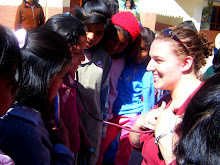
But when you learn to look beyond skin color, race, religion, language, or dress... You gain the ability to empathize with anyone, anywhere. It changes you. It took living with a Basotho family and being a part of my best friend, Makabelo's, family, for me to truly learn this. It took witnessing day-after-day of tiny, insignificant interactions between mothers and daughters, brother and sisters, and best friends for me to recognize myself in Basotho. I was surprised when Makabelo's home felt just as comfortable as my own, or when I realized that I couldn't love her kids any more if they were my own biological nieces and nephews. Suddenly they weren't Basotho and I wasn't a "lekhooa." We were just family. It's made me a kinder and more compassionate person. Now when I look at Basotho, I don't see differentness.... I see similarity.
9. The purpose of my life isn't to be happy or healthy or smart or rich... The purpose of my life is to live with grace.
"Live with grace. Live with grace. Live with grace." This has been my mantra throughout my time in Lesotho. These were the words I whispered to myself through difficult or challenging moments. Occasionally, it was a desperate prayer or sometimes just a meditative thought... I've been captivated by the concept of "grace" during my Peace Corps Service.
I think it's because I realised early on that it was the single word that captured my entire purpose for coming to Lesotho. GRACE. For me, to live with grace is not to be personally happy or even to make others happy. It's greater than duty or obligation. It can't be bought with money or material comforts. Grace, for me, is living in line with my purpose in the world. If you're religious, you might think of it as living aligned with God's will for your life... As a humanist, I prefer to think of it as living in harmony with other human beings. Living in a way that elevates and glorifies my species, rather than shaming or disappointing it. Grace is me centered; living in connection with the world and environment. It's living consciously, boldly, and without fear or reservation. Grace is me at my kindest and most compassionate. It is my projecting the best of myself into the world, in the hopes of enabling others to live fulfilled lives. Grace is difficult. It escapes me. It is something I often feel I fall short of... But still, I try again to "live with grace."
10. I don't care if people call me naïve... I believe the human species is capable of better.
I'm proud to say that I served my country and the country of Lesotho for two years as a Peace Corps Volunteer. I'm even more proud to say, however, that after two years of working in the development sector in a remote corner of the world, surrounded by abject poverty, I am more of an idealist now than when I stepped off the plane 26 months ago.
I believe in hope.
I have faith in people.
There are places in this world with overwhelming, seemingly insurmountable problems. Poverty, hunger, HIV/AIDS, lack of education and sanitation. My kids have these problems in spades. I have witnessed suffering; memories that haunt me. Yet, I still believe. I KNOW that my students and children are capable of anything. I understand that their present circumstances are detrimental to their futures, but they have taught me, wth their resiliency and laughter, to believe in the human spirit.
I refuse to look at the world and accept that a species that has unfurled the human genome and explored the heavens is incapable of equality, prosperity, justice, and peace for all peoples on earth. Anything less is beneath us as a human race. I won't accept it.
I hope you won't either.
With love, one final time, from Lesotho... Mary E.